2026 Best Car Battery Charger for Global Buyers

Time:2026-10-24 Author:Mason
0%

Choosing the 2026 best Car Battery Charger requires more than comparing charging speed and screen designs. Global buyers face different vehicle types, battery chemistries, electrical systems, climates, and safety expectations. A charger that performs well in a Canadian garage may need different protection in a humid tropical workshop. Country matters.

This guide examines practical features that affect daily ownership. These include voltage compatibility, charging modes, reverse-polarity protection, short-circuit control, thermal management, and automatic maintenance charging. It also considers lead-acid, AGM, EFB, and lithium batteries where supported by the manufacturer. Clear manuals matter. So do dependable warranties and accessible customer service. Buyers should confirm local plug requirements and input voltage before ordering. A small mistake can damage equipment or create unnecessary risk.

Real-world convenience receives equal attention. A useful charger should have readable indicators, flexible cable length, secure clamps, and stable operation beside a cold vehicle. Some models promise impressive results, but laboratory claims do not always match an aging battery. No charger can repair every failed battery. That point is easy to miss. This comparison uses manufacturer specifications, safety documentation, user feedback, and practical ownership considerations to support informed decisions. Still, recommendations are not perfect, because battery condition, climate, and driving habits vary widely. I may value simple controls over advanced displays, while another buyer prefers app connectivity. The strongest choice is the one that safely matches your vehicle, battery, location, and charging routine.
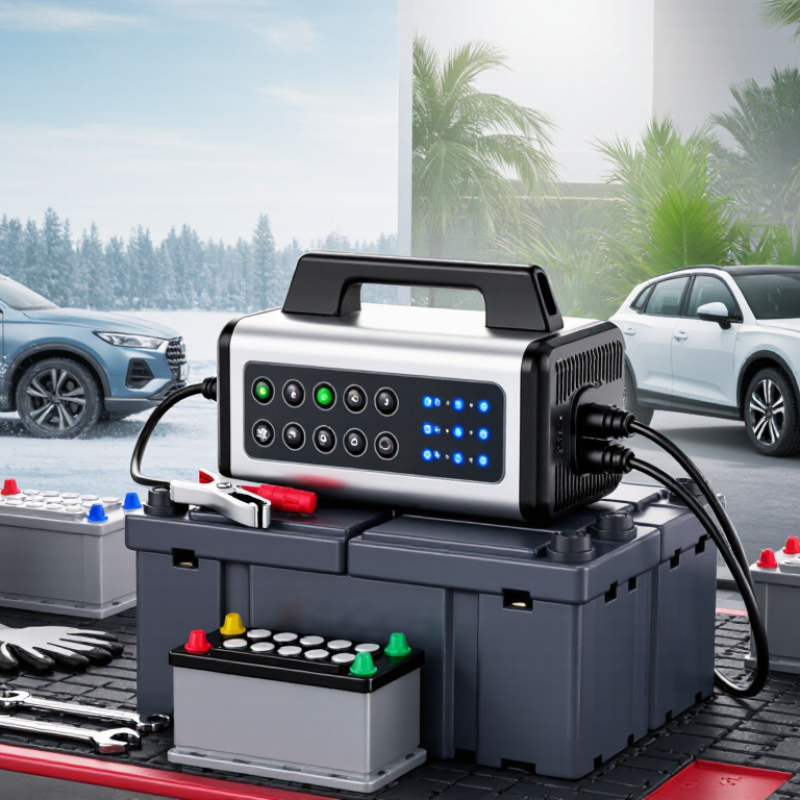
2026 Best Car Battery Charger for Global Buyers

Battery Charger Types: 6V, 12V, 24V, and 48V Systems Explained

For global buyers, the best car battery charger in 2026 starts with voltage matching, not advertising claims. A 6V charger suits many vintage vehicles, small utility machines, and selected mobility batteries. A 12V charger remains common in passenger cars, motorcycles, and light trucks. I check the battery label before connecting anything. One wrong setting can cause heat, leakage, or permanent damage. It is a small step. Many users skip it.

24V systems usually serve commercial trucks, buses, agricultural equipment, and paired 12V batteries. Their chargers need suitable amperage and a clear connection sequence. A 48V charger belongs to specific electric vehicles, industrial carts, and energy-storage systems. It must not be used on a 12V or 24V battery pack. The plug may fit. The electrical match may not. That mistake deserves more attention.

Look for automatic charge control, reverse-polarity protection, temperature monitoring, and a maintenance mode. Smart chargers reduce overcharging, but they cannot repair a sulfated or internally shorted battery. Ventilation matters, especially with flooded lead-acid batteries. Lithium systems require a charger designed for their chemistry and battery-management system. In my testing, simple displays were easier to trust than crowded menus, although this is not universal. Check output voltage, current, connector type, and local electrical certification before purchase.

Charging Profiles: Lead-Acid, AGM, EFB, and Lithium Battery Compatibility

A 2026 car battery charger must match the battery chemistry, not just the vehicle size. Lead-acid batteries usually accept conventional bulk, absorption, and float charging. AGM batteries need controlled voltage and lower ripple. EFB batteries resemble flooded batteries, but their cycling demands are higher. A charger with separate AGM and EFB settings reduces guesswork.

Lithium batteries require a different profile. Their battery-management system controls cell protection, while the charger must provide stable voltage without automatic desulfation pulses. The International Energy Agency reported nearly 14 million electric cars sold globally in 2023. That growth makes lithium compatibility increasingly important for global buyers. Yet not every lithium battery supports every charger.

Read the battery label first. Then check charging voltage, current, temperature limits, and connector polarity. A 12-volt label alone is insufficient. The Battery Council International reports lead batteries achieve collection and recycling rates above 99% in the United States, showing their continued automotive relevance. Still, recycling data does not prove charging compatibility. It is easy to confuse EFB with ordinary flooded batteries. I have seen this mistake cause repeated undercharging in short-trip vehicles. The charger seemed suitable, but the selected profile was wrong.

Good models include temperature monitoring and clear fault warnings. They should stop charging when polarity, overheating, or battery damage is detected. Avoid charging a frozen, swollen, or leaking battery. Some manuals remain unclear. That deserves criticism. A charger should explain its profile logic in plain language, not hide it behind vague “smart” claims.

Safety Standards: IEC 60335-2-29, UL 1236, and CE Requirements

When choosing a car battery charger for global use, safety standards deserve close attention. IEC 60335-2-29 addresses household and similar battery chargers. It examines insulation, temperature rise, abnormal operation, and protection against electric shock. A charger should also match the battery chemistry and voltage. A 12-volt lead-acid unit is not automatically suitable for lithium batteries.

UL 1236 is widely used for battery chargers in North American markets. It covers construction, wiring, grounding, enclosure strength, and operating safety. Look for certification from an accepted testing organization, not only a printed UL reference. A label can look convincing. It may still need verification through official certification records.

CE requirements apply differently across the European market. The CE mark indicates that the manufacturer declares conformity with applicable European rules. It is not one single safety test. Depending on the charger’s design, requirements may include the Low Voltage Directive, EMC rules, and RoHS restrictions. Ask for the EU Declaration of Conformity and basic technical information. Check the rated input, output current, plug type, and protection class.

Small details matter. A cable that feels thin may heat during overnight charging. Poor ventilation can raise internal temperatures. I would not trust a charger based on packaging alone. Standards help, but testing scope and documentation still need careful review. Local grid voltage also deserves attention; this detail is easy to overlook.

Performance Metrics: Amperage, Efficiency, IP Ratings, and Charging Time

Choosing a car battery charger for global use starts with measurable output, not advertised peak amperage. A 2A setting suits motorcycles and small batteries. A 10A setting is more practical for a 60Ah passenger-car battery. Charging time depends on battery condition, temperature, and conversion losses.

A simple estimate is capacity divided by current, then add 15–25% for charging inefficiency.

A 60Ah battery at 10A may need about seven hours. Real testing can take longer.

The U.S. Department of Energy’s battery-charger test procedure measures active-mode efficiency and no-load power. Buyers should request both values, because standby consumption quietly increases energy use.

The International Energy Agency reported global electric-car sales above 17 million in 2024. That growth makes electrical efficiency more important, even for auxiliary 12-volt batteries.

Efficiency above 85% is a sensible practical target for many compact chargers, though higher is preferable.

Ingress protection also deserves attention. IEC 60529 defines IP ratings by resistance to solids and water. IP65 indicates dust protection and resistance to water jets, while IP67 adds temporary immersion protection.

Outdoor users should still avoid standing water. That detail matters.

Charging time claims can be optimistic, especially with sulfated or cold batteries.

I have found that temperature compensation and automatic current reduction protect batteries better than forcing maximum amperage. Yet protection circuits may extend charging time, so a slower result is not always poor performance.

Global Buying Guide: Voltage Compatibility, Plug Standards, and Warranty Terms

2026 Best Car Battery Charger for Global Buyers

A reliable charger begins with voltage compatibility, not charging speed. Check the input range printed on the unit and its manual. Many global models support 100–240V AC, but some accept only one regional voltage. Using the wrong input can damage the charger and create a serious safety risk. Output voltage must also match the battery system, commonly 12V or 24V. I always compare the charger’s charging profile with the battery type, including lead-acid, AGM, or lithium. Compatibility is easy to assume. That assumption can be costly.

Plug standards vary across countries, even when electrical voltage matches. Confirm the plug shape before ordering, and consider a certified travel adapter when necessary. An adapter changes the connection, not the charger’s voltage. Keep that distinction clear. Check cable length, fuse protection, and local socket fit during installation. My own buying checks have missed cable reach before, which made a suitable charger inconvenient in practice.

Tips: Photograph the product label before purchase. Save the invoice, manual, and warranty page. Read whether the warranty covers international buyers, shipping, labor, and replacement parts. Some warranties require registration within a fixed period. Others exclude damage from incorrect voltage or unauthorized repairs. Ask the seller about regional service centers and return shipping. Warranty wording can be vague, and I have learned not to treat “global support” as a complete promise.

2026 Global Car Battery Charger Buying Guide

For lead-acid automotive batteries, a 12 V battery is typically charged at approximately 14.4–14.7 V, while a 24 V battery is typically charged at approximately 28.8–29.4 V. Select a charger with the correct battery-system setting and verify that its input voltage matches the local electrical supply.

Common household supplies include 100 V in Japan, 110–120 V in North America, and 220–240 V across much of Europe, Asia, Africa, and Oceania. Plug shapes also vary: Type A/B are common in North America and Japan, while Type C/E/F are widely used in Europe and many other regions. Warranty coverage, repair terms, and replacement conditions should be confirmed before purchase.

FAQS

How do I choose the correct charger voltage?

Match the charger with the battery system: 6V, 12V, 24V, or 48V. Check the battery label first. Never guess.

Which vehicles commonly use 12V chargers?

Many passenger cars, motorcycles, and light trucks use 12V batteries. Confirm the label before connecting the charger.

When is a 24V charger suitable?

A 24V charger suits some buses, commercial trucks, agricultural machines, and paired 12V batteries. The connection sequence still matters.

Can I use a 48V charger on a 12V battery?

No. The electrical match is wrong, even if the plug fits. It may cause heat or permanent damage.

Does battery chemistry affect charger selection?

Yes. Lead-acid, AGM, EFB, and lithium batteries need different charging profiles. Voltage alone is not enough.

What features make a charger safer?

Look for automatic control, reverse-polarity protection, temperature monitoring, and clear fault warnings. Simple displays may be easier to trust.

Can a smart charger repair a damaged battery?

No. It cannot reliably repair a swollen, leaking, frozen, sulfated, or internally shorted battery. Stop and inspect first.

What should global buyers check before ordering?

Check input voltage, output voltage, plug shape, connector polarity, cable length, certification, and warranty coverage. Small details matter.

Is a travel adapter enough for international charging?

An adapter changes the plug connection, not the charger’s voltage. Confirm the charger supports the local electrical supply.

What warranty details deserve attention?

Check international coverage, registration deadlines, return shipping, labor, replacement parts, and damage exclusions. “Global support” can sound clearer than it is.

Conclusion

Choosing the right Car Battery Charger in 2026 requires more than matching a plug to a vehicle. This guide explains the differences between 6V, 12V, 24V, and 48V charging systems, helping global buyers select the correct voltage for cars, motorcycles, commercial vehicles, and specialized equipment. It also compares charging profiles for lead-acid, AGM, EFB, and lithium batteries, emphasizing the importance of compatibility, automatic charge control, and battery protection.

The guide further covers key safety requirements, including IEC 60335-2-29, UL 1236, and CE expectations, along with practical performance factors such as amperage, energy efficiency, IP protection ratings, and estimated charging time. For international purchasing, readers will learn how to verify voltage compatibility, plug standards, warranty terms, and regional support before buying. These considerations make it easier to choose a reliable, efficient, and safe charger for different battery technologies and operating environments.


Mason

Mason

Mason is a seasoned marketing professional with a deep expertise in the company's offerings and a passion for driving brand awareness. With a strong background in digital marketing strategies, he has an innate ability to connect with diverse audiences and effectively communicate product benefits.......