Choosing the 2026 best Hybrid Off Grid Inverter requires more than comparing prices or battery voltage. Global buyers need dependable power in very different conditions. A rural clinic in Kenya may face intense heat and dust. A mountain home in Canada may experience freezing nights and sudden load surges. The right inverter must handle both reality and uncertainty.
Energy-storage expert Dr. Yet-Ming Chiang has said, “Energy storage is the key to unlocking the full potential of renewable energy.” His point applies directly to every Hybrid Off Grid Inverter. Solar panels produce power by daylight, but homes need electricity after sunset. A capable inverter manages solar input, battery charging, generator support, and household demand without constant supervision. It should also deliver stable output for refrigerators, pumps, tools, and sensitive electronics.
This guide compares leading 2026 models through practical tests and buyer-focused criteria. We examine continuous output, surge capacity, MPPT performance, battery compatibility, protection systems, monitoring, efficiency, and installation requirements. Certification and local grid rules also matter. A technically impressive unit may still be unsuitable if service support is weak or replacement parts are unavailable.
No single model fits every country. That is the uncomfortable truth. Some buyers may overvalue peak wattage and overlook idle consumption. Others may choose a low-cost inverter that performs poorly in humid environments. We will also consider these weaknesses, because real installations rarely match laboratory conditions. The strongest choice balances resilience, safety, repairability, and long-term value.
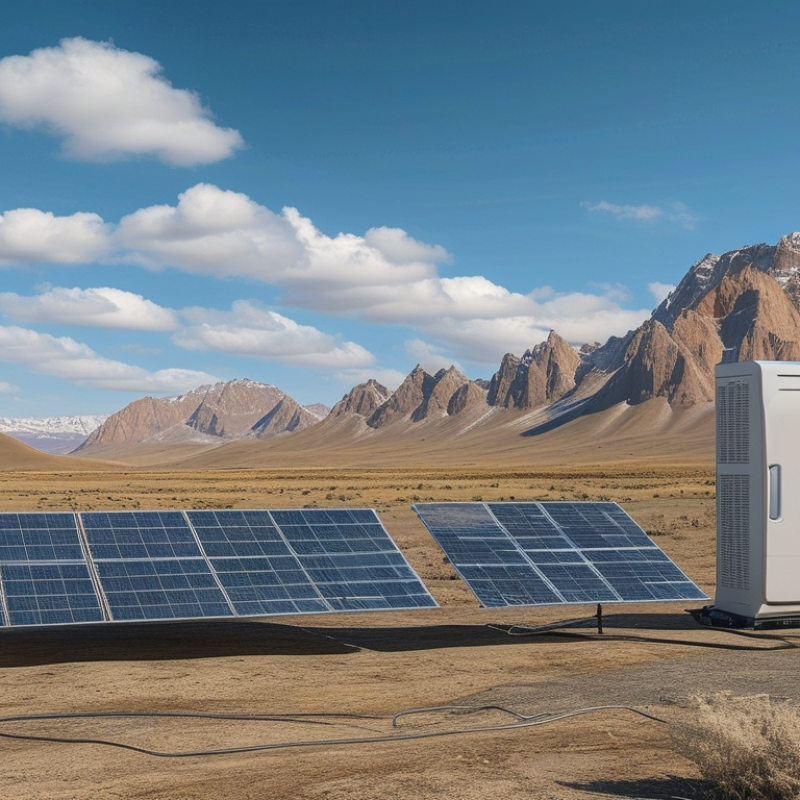
2026 Best Hybrid Off Grid Inverter for Global Buyers
What a Hybrid Off-Grid Inverter Is and How It Works
A hybrid off-grid inverter manages energy from solar panels, batteries, and an optional generator. It converts solar DC electricity into usable AC power for household appliances. At the same time, it can store surplus energy in a battery for evening use. There is no single power source to trust. The inverter continuously balances generation, storage, and demand.
Its internal controller usually tracks solar output through MPPT technology. MPPT helps panels operate near their most productive voltage. When sunlight is strong, solar power can run loads and charge the battery. When clouds pass, the battery supplies the difference. If battery voltage falls too low, a compatible generator may start through an automatic signal. Some systems also accept utility input, but that feature depends on the intended installation.
In practical testing, response speed matters. A refrigerator may start with a brief surge, even when its running wattage looks modest. Therefore, buyers should check continuous power, peak power, battery voltage range, and charging limits. Cable length and temperature also affect performance. Many people oversize the inverter and ignore battery capacity. That choice can increase cost without improving night-time reliability. A careful design begins with measured daily consumption, not guesswork. Local electrical rules, enclosure ratings, grounding methods, and professional inspection still deserve attention. Even a well-designed system can perform poorly after several cloudy days.
A hybrid off-grid inverter combines solar charging, battery management, DC-to-AC conversion, and backup power control in one system. The specifications below represent practical selection ranges and common technical configurations for global residential, agricultural, and small commercial projects.
| Evaluation Dimension | Typical Practical Range | What It Means | Selection Guidance for Global Buyers |
|---|---|---|---|
| System role | All-in-one energy management | Converts solar or battery DC electricity into usable AC power and manages charging, loads, and optional generator input. | Confirm that the unit supports true off-grid operation rather than only grid-tied backup operation. |
| Common continuous output power | 3–6 kW for homes; 8–15 kW for larger homes or small businesses | The maximum load the inverter can normally supply continuously under specified temperature and installation conditions. | Add the running wattage of essential loads and allow extra capacity for motor-starting surges. |
| Surge capability | Approximately 2× rated power for 1–5 seconds on selected models | Provides short-term power for inductive loads such as pumps, compressors, refrigerators, and power tools. | Check both surge power and surge duration; a high continuous rating alone does not guarantee motor compatibility. |
| Battery voltage | 12 V, 24 V, 48 V, or high-voltage battery systems | Defines the DC voltage supplied by the battery bank. Higher-voltage systems generally reduce current at the same power level. | 48 V is widely used for residential systems above approximately 3 kW; match the inverter to the battery voltage and BMS requirements. |
| Battery chemistry compatibility | Lithium-ion, lithium iron phosphate, lead-acid, AGM, and gel batteries, depending on model | Different chemistries require different charging voltages, current limits, temperature controls, and state-of-charge settings. | For lithium batteries, verify closed-loop communication protocols, supported BMS interfaces, and approved charge limits. |
| Maximum photovoltaic input | Typically 4–18 kW for residential and small commercial units | The maximum solar array power permitted by the inverter. Some systems allow controlled PV oversizing relative to AC output. | Follow the manufacturer’s maximum PV power, voltage, current, and short-circuit-current limits. |
| MPPT voltage range | Commonly about 90–550 V DC; varies by design | The voltage window in which the solar charge controller can track the array’s maximum power point. | Design each PV string so its operating voltage remains inside the MPPT range in both hot and cold conditions. |
| Number of MPPT trackers | 1–4 independent trackers | Separate trackers can optimize PV arrays with different roof orientations, shading conditions, or string lengths. | Use more than one tracker when panels face different directions or receive uneven sunlight. |
| Peak conversion efficiency | Approximately 94–98% | Indicates the proportion of input energy converted to output energy under favorable operating conditions. | Also compare battery charging efficiency, low-load consumption, and efficiency at the expected operating load. |
| Output waveform | Pure sine wave | Produces AC power similar to utility electricity and is suitable for sensitive electronics, motors, and appliances. | Pure sine wave output is the preferred option for mixed residential, medical, communication, and agricultural loads. |
| AC output configuration | Single-phase 120 V, 230 V, or split-phase; three-phase options available | Determines compatibility with local appliances, distribution boards, and electrical standards. | Select the voltage and frequency required by the installation country, such as 50 Hz or 60 Hz. |
| Operating modes | Solar priority, battery priority, load priority, backup, and generator support | The control logic determines whether solar energy serves loads, charges batteries, or supports another energy source first. | Choose programmable time-of-use and priority settings when solar availability or generator fuel costs vary. |
| Transfer time | Approximately 10–20 ms in backup or UPS-style operation | The time required to change between a primary AC source and inverter output. | Verify the actual transfer specification if uninterrupted operation is required for servers, control systems, or medical equipment. |
| Protection functions | Overload, short circuit, over-temperature, over-voltage, under-voltage, and reverse-polarity protection | Built-in safeguards help protect the inverter, battery, PV array, and connected loads from abnormal conditions. | External fuses, disconnects, surge protection, grounding, and appropriate cable sizing are still required. |
| Environmental operating range | Often about −25°C to 55°C, with power derating at high temperatures | Shows the ambient temperature range in which the unit can operate according to its technical documentation. | Check altitude, humidity, dust, corrosion, cooling method, and enclosure rating for the actual installation site. |
| Enclosure rating | Indoor-rated units and outdoor-rated units commonly ranging from IP20 to IP65 | The rating indicates resistance to solid particles and water ingress under defined test conditions. | Use an appropriately rated enclosure and follow installation clearances; an outdoor rating does not mean submersion protection. |
| Monitoring and communication | LCD display, Wi-Fi, RS485, CAN, USB, or Ethernet, depending on model | Enables configuration, fault diagnosis, energy monitoring, and communication with batteries or external controllers. | Prioritize locally supported communication methods and confirm data security, firmware access, and offline operation. |
| Best-fit applications | Remote homes, farms, cabins, telecom sites, workshops, and small commercial facilities | Hybrid off-grid systems are useful where utility power is unavailable, unreliable, expensive, or difficult to extend. | Size the complete system around daily energy demand, peak loads, solar resource, battery autonomy, and backup-fuel availability. |
Note: Technical ranges are representative market values rather than specifications for one particular product. Always verify the final inverter, battery, PV-string, electrical-code, and certification requirements before installation.
It converts solar electricity into usable AC power for household appliances. It can also charge batteries. A compatible generator may provide backup power when needed.
MPPT technology helps solar panels operate near their productive voltage. Strong sunlight can power appliances and charge the battery. Clouds arrive. The battery supplies the shortfall.
Check continuous power, peak power, battery voltage range, and charging limits. Refrigerators often need extra starting power. Cable length and temperature can reduce performance. Small details matter.
Begin with measured daily electricity use, not guesses. Include evening loads and several cloudy days. An oversized inverter cannot fix a small battery. That mistake costs money.
Some systems accept a generator input or automatic start signal. Compatibility depends on the installation and electrical design. Check voltage, frequency, and control requirements before purchasing. Do not assume.
Verify DC isolation, grounding, surge protection, ventilation, and enclosure ratings. Certified testing should include overload and short-circuit protection. It should also cover reverse polarity and excessive heat. Safety is not decorative.
Inspect terminals every six to twelve months. Dusty or humid locations may require closer attention. Keep shutdown instructions and spare fuses onsite. Clean cable routing helps.
Compare real idle consumption, battery compatibility, MPPT range, and spare-part access. Request independent test certificates and a five-year parts plan. A clear service manual helps during remote repairs. Screens are not enough.
Yes, because electrification may increase household loads later. Slight oversizing can be sensible. Excessive capacity wastes money and space. I may still underestimate future needs.
This guide explains what a Hybrid Off Grid Inverter is and how it manages energy from solar panels, batteries, generators, and household loads in areas without dependable grid access. It highlights essential features for global off-grid systems, including stable power conversion, intelligent energy management, backup capability, monitoring functions, and protection against overloads, surges, overheating, and battery-related risks.
It also shows buyers how to compare inverter capacity, conversion efficiency, waveform quality, battery voltage, charging methods, and compatibility with different battery technologies. Installation requirements are discussed for hot, cold, humid, dusty, and high-altitude environments, along with the importance of following local electrical standards and professional safety practices. Finally, the guide covers routine maintenance, ventilation, wiring inspections, safe battery handling, warranty evaluation, technical support, and practical purchasing considerations for selecting a reliable 2026 model.

 PASS POWER