2026 Top Battery Charger Manufacturers Worldwide

Time:2026-10-18 Author:Amelia
0%

As electrification expands, the Battery Charger market is becoming more specialized, competitive, and difficult to compare. In 2026, leading manufacturers serve diverse needs, including smartphones, power tools, electric vehicles, marine systems, and industrial equipment. Their products differ in charging speed, battery chemistry support, thermal control, software integration, and long-term reliability.

This guide examines top Battery Charger manufacturers worldwide through practical and technical criteria. It considers product experience, engineering depth, international certifications, warranty policies, production capacity, and after-sales support. A charger used in a dusty workshop should not be judged like a compact travel adapter. Port design, cable strain relief, cooling noise, display accuracy, and protection against overheating can affect daily performance. Small details matter.

Real-world testing remains important. A specification sheet may promise high efficiency, yet performance can change under heat, unstable voltage, or repeated charging cycles. This comparison therefore values measurable evidence, transparent documentation, and feedback from professional users. It also considers whether manufacturers support firmware updates, replacement parts, and clear safety instructions.

No ranking is perfect. Market data changes quickly, and regional availability can influence a manufacturer’s reputation. Some companies publish extensive technical information; others provide limited evidence. That difference deserves attention. Readers should verify current certifications, local service coverage, and compatibility before making a purchasing decision. The strongest manufacturers are not always the most visible ones. Reliability is earned over time.
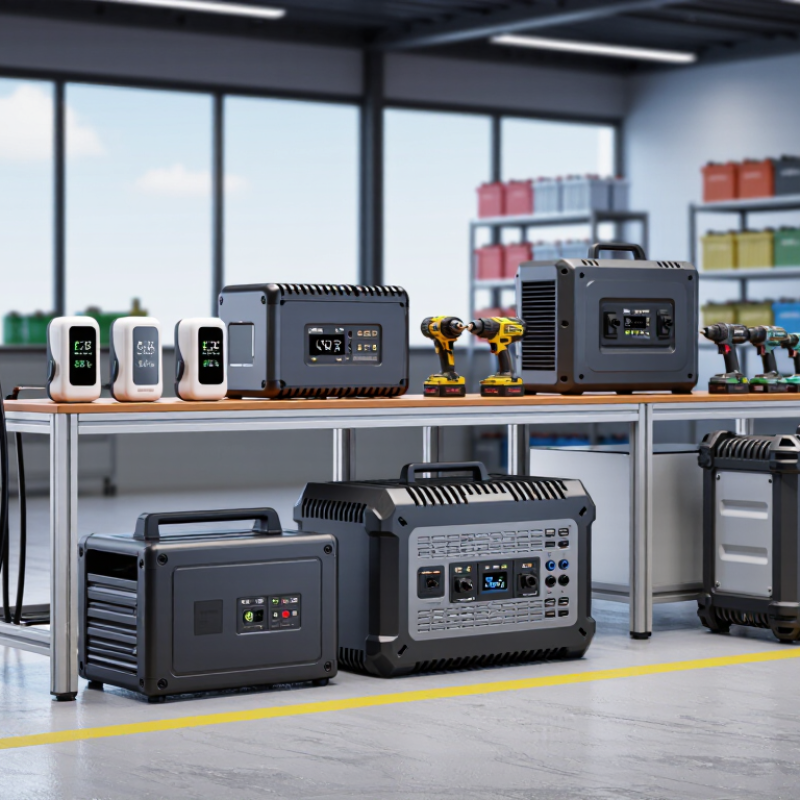
2026 Top Battery Charger Manufacturers Worldwide

Battery Charger Industry Overview and 2026 Market Scope

The 2026 battery charger market is moving from simple power conversion toward connected, application-specific systems. Demand is rising across electric mobility, energy storage, industrial automation, medical equipment, and consumer devices. Manufacturers worldwide are investing in higher power density, thermal control, and software-based monitoring. The market scope now includes AC chargers, DC fast chargers, modular industrial units, wireless systems, and chargers designed for lithium-based battery packs. This is a broad field.

Professional evaluation should begin with charging chemistry, voltage range, current accuracy, and duty cycle. A warehouse vehicle may need rugged air cooling, while a residential system may prioritize quiet operation and remote diagnostics. Field experience shows that efficiency figures alone can mislead. Cable losses, standby consumption, heat buildup, and maintenance access can change operating costs. Testing under realistic temperature and load conditions gives more useful evidence. Datasheets help, but verified performance matters more.

In 2026, leading manufacturers are likely to compete through safety engineering, interoperability, production scale, and after-sales support. Buyers should examine certification records, warranty terms, firmware update policies, and spare-part availability before selecting equipment. Supply chain resilience also matters, especially for power semiconductors, connectors, and cooling components. Some forecasts may overstate adoption because regional grids and charging habits differ. That uncertainty deserves attention. A reliable market assessment should separate shipment growth from profitable, repeatable deployment.

Key Criteria for Ranking Global Battery Charger Manufacturers

Ranking global battery charger manufacturers in 2026 requires more than comparing advertised power ratings. The IEA’s Global EV Outlook 2024 reported nearly four million public charging points worldwide by the end of 2023. That expansion raises the value of dependable equipment, not merely fast equipment. A credible ranking should examine conversion efficiency, thermal control, charging accuracy, protection against overcurrent, and compliance with relevant IEC standards. Field testing matters. A charger that stays cool beside a dusty warehouse performs differently from one tested in a clean laboratory.

Manufacturing traceability should carry serious weight. Review warranty claims, component origins, software update records, and documented failure rates. The U.S. Department of Energy’s Alternative Fuels Data Center highlights connector compatibility, network reliability, and station uptime as practical infrastructure concerns. These factors should influence rankings because a failed charger can interrupt fleet operations for hours. Independent certification also strengthens trust, although certification alone cannot prove long-term durability. That distinction is often overlooked.

Cost needs careful interpretation. The IEA’s Global EV Outlook 2025 recorded more than 17 million electric cars sold in 2024, increasing pressure on charging networks and service teams. Ranking models should compare lifetime cost, installation demands, energy losses, repair access, and warranty support. Customer feedback can reveal details that laboratory data misses, such as brittle screens or confusing fault codes. No ranking is flawless. I would still publish the scoring method, disclose missing data, and revisit results when field evidence changes.

Leading Battery Charger Manufacturers Worldwide in 2026

Leading Battery Charger Manufacturers Worldwide in 2026 are judged by more than production volume. Their strongest facilities combine electrical engineering, automated testing, and disciplined quality control. They design chargers for vehicles, industrial equipment, medical devices, and consumer electronics. Each segment demands different voltage ranges, thermal limits, connector standards, and charging profiles. That difference matters.

Experienced manufacturers validate products through cycle testing, insulation checks, surge testing, and controlled temperature trials. In a modern factory, technicians may inspect solder joints under magnification before final testing. Reliable suppliers publish efficiency data, protection features, operating temperatures, and warranty conditions. They also trace components by batch, helping engineers investigate failures instead of guessing. Independent certifications strengthen confidence, but certificates alone do not prove daily performance. Field evidence still matters.

The most capable global producers invest in firmware updates, repair support, and regional service networks. They listen to installers who report loose connectors, confusing displays, or cables that fail in winter. This feedback turns laboratory knowledge into practical design improvements. No ranking is perfect. Supply disruptions, changing standards, and uneven after-sales support can alter a manufacturer’s position within months. Buyers should compare verified test records, service response times, and total operating cost before selecting a supplier. A polished brochure is not enough.

Charger Technologies, Product Categories, and Industry Applications

2026 Top Battery Charger Manufacturers Worldwide

Charger Technologies, Product Categories, and Industry Applications

Battery charger competition in 2026 will center on efficiency, safety, and application fit. Technology choice matters more than peak wattage.

AC chargers remain practical for homes, offices, and overnight fleet depots. DC fast chargers serve highways, logistics yards, and emergency charging points. The International Energy Agency reported more than four million public charging points worldwide by the end of 2023. It also recorded over 1.3 million new public points that year. These figures show why modular power conversion and reliable thermal management matter.

Product categories now extend beyond vehicle chargers. Portable chargers support field technicians and outdoor equipment. Industrial systems charge forklifts, automated guided vehicles, and backup batteries. Bidirectional chargers can exchange energy with buildings or local grids. Wireless charging reduces cable wear, although alignment losses still limit some deployments. Battery Energy Storage System suppliers increasingly require chargers with precise monitoring and scalable power modules.

Application conditions change the engineering priorities. Medical equipment needs stable output and documented protection. Telecommunications sites value remote diagnostics and long standby performance. Electric mobility requires high uptime, weather resistance, and payment integration. The IEA expects global electric car sales to keep expanding through 2024 and beyond, increasing pressure on charging infrastructure. However, charger growth alone does not guarantee service quality. A poorly positioned unit can remain underused. That assumption needs testing through local traffic, grid capacity, and maintenance data. The industry still learns this slowly.

2026 Top Battery Charger Manufacturers Worldwide

Charger Technologies, Product Categories, and Industry Applications

The chart compares representative maximum rated power levels supported by widely used charging specifications. USB charging is mainly used for consumer electronics, Qi2 for wireless mobile devices, AC charging for residential and workplace electric vehicles, and DC fast charging for highway, fleet, and commercial applications. The values represent technology capability rather than market share or manufacturer performance.

Global Market Trends and Future Developments in Battery Charging

2026 Top Battery Charger Manufacturers Worldwide

Global battery charging is moving from simple power delivery toward intelligent energy management. Manufacturers are developing chargers that adjust voltage, current, and temperature in real time. This matters in electric vehicles, warehouse equipment, medical devices, and residential storage systems. Silicon carbide and gallium nitride components can reduce heat and shrink charger size. However, compact designs still require careful thermal testing. Smaller is not always safer.

Bidirectional charging is gaining attention across global markets. A vehicle or storage unit may supply electricity back to a building during peak demand. Smart software can schedule charging when renewable power is available or grid prices are lower. Interoperability remains a practical challenge. Different connectors, communication protocols, and regional requirements can slow deployment. Field engineers often discover this after installation, not during a presentation.

Leading manufacturers are investing more in lifecycle reliability, traceable materials, and automated production checks. Moisture protection, cable strain testing, and battery fault detection are becoming standard expectations. Cybersecurity will also influence connected chargers, especially when remote updates control charging behavior. International safety certification and transparent performance data will remain essential for buyers. Forecasts are not perfect. Supply disruptions, recycling capacity, and changing energy policies could reshape the market quickly. The strongest companies will likely combine efficient hardware with repairable designs, responsive service networks, and evidence from long-term field use.

FAQS

What is driving the battery charger market in 2026?

Demand is growing in electric mobility, energy storage, automation, medical equipment, and consumer devices. Connected systems are replacing basic power conversion. Field needs differ widely.

Which charger types are included in the 2026 market?

The market includes AC chargers, fast DC units, modular industrial systems, wireless chargers, and lithium-battery chargers. Each type has different voltage, current, cooling, and connector requirements.

How should buyers evaluate a battery charger?

Check battery chemistry, voltage range, current accuracy, duty cycle, and operating temperature. Also review cable losses, standby power, maintenance access, and heat buildup. Datasheets help. Verified testing matters more.

Why is realistic testing important?

A charger may perform well in a cool laboratory but struggle in a hot warehouse. Testing should include changing loads, temperature swings, insulation checks, and surge conditions. Small details matter.

What qualities define a reliable charger manufacturer?

Reliable manufacturers use automated testing, traceable components, controlled production, and clear quality procedures. They should provide warranty terms, repair support, firmware policies, and spare-part information. A polished brochure is not enough.

Are efficiency ratings enough for comparing chargers?

No. Efficiency ratings may exclude cable losses, standby consumption, heat, and service costs. A slightly less efficient charger may cost less overall if it lasts longer. This needs real operating evidence.

What future technologies are shaping battery charging?

Intelligent software can adjust voltage, current, and temperature during charging. New power components may reduce heat and make chargers smaller. Not always safer. Compact designs still require serious thermal testing.

What challenges could slow global charger adoption?

Different connectors, communication protocols, regional grids, and safety rules can delay installation. Supply shortages may affect semiconductors, connectors, and cooling parts. Forecasts can be wrong.

What should buyers know about bidirectional charging?

Bidirectional systems can send electricity from vehicles or storage units back to buildings. They may support renewable energy use or reduce peak electricity demand. Compatibility must be confirmed before installation.

How important are cybersecurity and after-sales service?

Connected chargers may receive remote updates that influence charging behavior. Buyers should review access controls, update policies, service response times, and repair options. Long-term field feedback remains incomplete.

Conclusion

The 2026 global battery charger industry is entering a period of rapid transformation, driven by the growth of electric mobility, renewable energy systems, consumer electronics, industrial automation, and energy storage. This overview examines the market scope, regional development, and major factors shaping demand. It also explains how leading manufacturers can be evaluated through product reliability, charging efficiency, safety standards, technological innovation, production capacity, customization services, and global support capabilities.

The article further compares major charger technologies and product categories, including wired, wireless, fast-charging, smart, modular, and energy-efficient solutions. Their applications range from vehicles and portable devices to commercial equipment, medical systems, and industrial operations. Looking ahead, Battery Charger development will focus on intelligent energy management, improved thermal control, enhanced compatibility, lower environmental impact, and integration with connected energy networks. These trends are expected to create new opportunities while encouraging manufacturers to deliver safer, more efficient, and adaptable charging solutions worldwide.


Amelia

Amelia

Amelia is a seasoned marketing professional with a wealth of expertise in our company’s core offerings. With an unwavering passion for driving growth and innovation, she plays a pivotal role in shaping our marketing strategies and enhancing brand visibility. A key aspect of her responsibilities......