Choosing an Intelligent Battery Charger is not just about picking the newest model. The right charger should match your battery’s chemistry, voltage, and capacity. A unit designed for a 12-volt car battery may not suit a lithium battery or a small motorcycle battery. Check the manufacturer’s instructions before connecting it.
Smart charging features can make routine maintenance easier. Many chargers adjust current as a battery fills, then switch to a maintenance mode. Some also show charging status on a screen or use indicator lights. These details help, especially when a vehicle sits unused for weeks. Still, a feature list cannot replace clear instructions and appropriate safety protections.
This guide compares seven chargers for different needs, from occasional car care to maintaining batteries in seasonal equipment. We look at compatibility, charging speed, ease of use, and practical safeguards. A long cable may matter in a crowded garage. So may a compact case that fits in a trunk. Details matter.
No single charger is ideal for everyone. A powerful model may be unnecessary for a small battery, while a basic unit might lack useful controls for frequent use. It is easy to overvalue extra features. I would still check the manual twice before choosing. The comparisons ahead are intended to help you narrow the options and select a charger that fits your battery and your routine.
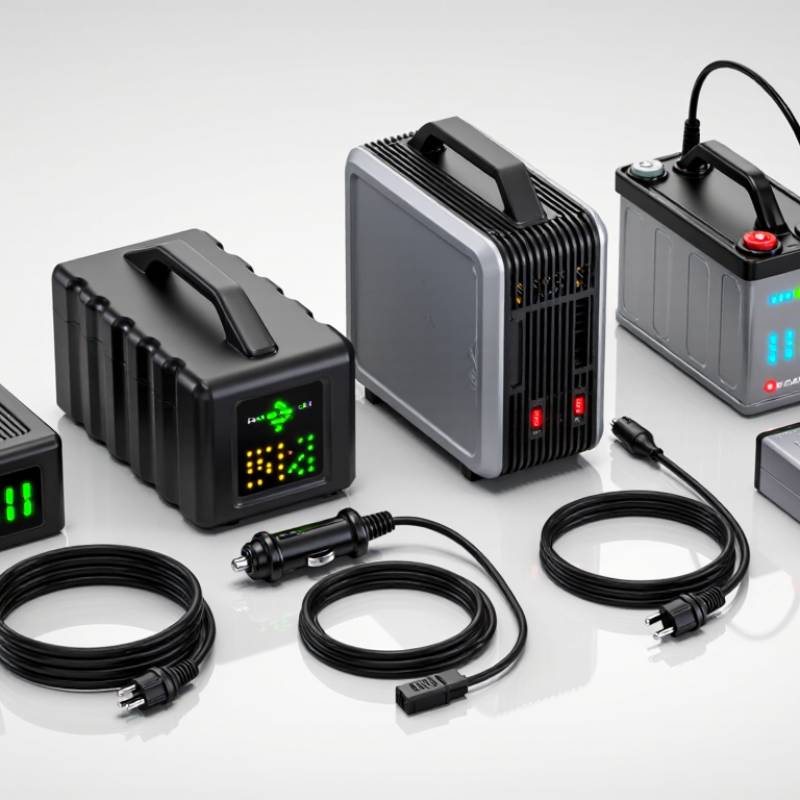
An intelligent battery charger does more than deliver a fixed current. It measures battery voltage and, in some designs, temperature, then adjusts charging as the battery fills. Many use staged charging: a higher-current phase, a controlled topping phase, and a lower-voltage maintenance phase. That distinction matters. A bright display alone does not make a charger intelligent.
Chemistry matters too. Lead-acid and lithium batteries require different charging limits, so a charger should identify or let the user select the correct profile. The International Energy Agency’s Global EV Outlook 2024 reports that electric-car battery demand exceeded 750 gigawatt-hours in 2023, around 40% above 2022. That figure describes battery demand, not charger performance, but it shows why precise, chemistry-aware charging is increasingly relevant. Check the battery manual; “automatic” does not mean suitable for every battery.
Useful safeguards include reverse-polarity detection, over-temperature protection, and automatic shutoff or maintenance control. IEC 60335-2-29 sets safety requirements for battery chargers, but safety compliance alone does not define an intelligent charging algorithm. In a cold garage, temperature-aware control can help avoid inappropriate charging conditions. Still, sensors can be imperfect, and a charger cannot repair a damaged battery. Examine its casing and connections before charging, and treat unexplained heat or swelling as a stop signal.
Smart charging is less about speed than judgment. A capable charger reads voltage, current, and, on some models, temperature, then adjusts its charging stage to suit the battery. That can mean a gentler current when a battery is cold, or a change in voltage as it approaches full charge. The details matter: lead-acid batteries and lithium-ion batteries need different charging limits, so a charger must match the battery chemistry. A blinking indicator is not a diagnosis. Check the battery manual and the charger’s temperature range before leaving them connected.
Temperature can change battery performance sharply. AAA’s 2019 automotive research found that at 20°F, tested electric vehicles lost an average of 41% of their driving range when cabin heating was used; at 95°F, air-conditioning reduced range by 17%. Those figures describe vehicle range, not charging speed, but they show why temperature deserves attention. In the garage, a cold battery may accept charge differently from one at room temperature. That matters. A charger with temperature compensation can respond, but it cannot repair a damaged battery or make every chemistry compatible. In practice, inspect the cables, watch for unusual heat, and treat a persistent error light as a reason to stop and check the battery—not as a minor nuisance.
An intelligent charger should match battery chemistry, capacity, and how the vehicle is used. Lead-acid, AGM, and lithium batteries need different charging profiles; one universal setting can be a poor fit. Battery University’s technical guide BU-403 gives a typical lead-acid charging range of 2.30–2.45 volts per cell. That small range matters. For a six-cell, 12-volt battery, it corresponds to 13.8–14.7 volts. Check the battery maker’s specifications before choosing a charger, especially for lithium batteries, which require a compatible charging profile and temperature safeguards.
Charging speed is not the only useful feature. A low-current mode can suit a small motorcycle battery, while higher output may be practical for a large vehicle battery. Automatic shutoff, reverse-polarity protection, and a clear status display help reduce user error. The International Energy Agency’s Global EV Outlook 2024 reports about 14 million electric cars sold in 2023, nearly 18% of car sales. That broader shift makes battery knowledge more important, though EV traction batteries require dedicated charging equipment—not ordinary 12-volt maintainers.
Tips: Match charger voltage and chemistry to the battery label. Check current against battery capacity. If a battery gets unusually warm, stop and reassess; I would not rely on an “automatic” label alone. A display helps, but it cannot fix a mismatched charger.
Why it matters: Choose a charger with a battery-chemistry setting that matches your battery. The ranges shown are typical absorption-voltage recommendations; always follow the battery manufacturer’s specifications.
Choosing an intelligent battery charger starts with the battery, not the vehicle. A compact 12-volt charger suits occasional car care, while a low-current maintainer can help keep a stored motorcycle ready. Fit matters. Check the battery’s voltage and chemistry before connecting anything. Automatic shutoff is useful, but it does not make an incompatible charger safe.
For larger vehicles, a higher-output charger may better match the battery’s capacity; charging speed still depends on battery condition and temperature. AGM batteries need a charger with an appropriate AGM setting. Lithium batteries require a compatible charging profile and built-in protections. I would not treat these settings as interchangeable. Read the battery label and charger instructions, especially when the battery is cold or has been deeply discharged.
A multi-bank charger can serve a boat or workshop with several batteries, provided each output supports the battery type. For outdoor use, choose a unit rated for the conditions where it will sit, and keep connections dry. Small details matter: cable reach, clamp grip, and clear status lights can make routine charging less frustrating. I may give those conveniences too much weight, but a charger that is awkward to use often stays on the shelf.
| Charger Type | Best Use Case | Typical Battery Support | Typical Output | Intelligent Features | Important Limitation |
|---|---|---|---|---|---|
| Compact maintainer | Motorcycles, lawn equipment, and vehicles stored between uses | Most 12 V lead-acid types, including conventional flooded and many AGM batteries | About 0.8–2 A | Automatic charge monitoring, maintenance mode, and reverse-polarity protection are common | Low current makes it slow for large or deeply discharged batteries |
| General-purpose 12 V charger | Everyday cars and light trucks | 12 V lead-acid batteries; compatibility with AGM or other types depends on the charger | About 4–10 A | Multi-stage charging, automatic shutoff or float mode, and fault indication are common | Confirm that the selected charging mode matches the battery chemistry |
| AGM-optimized charger | Vehicles with AGM starter batteries, including some vehicles with start-stop systems | 12 V AGM lead-acid batteries; some models also support flooded batteries | About 4–10 A for common consumer models | A battery-specific charging profile helps manage the charging voltage and stages | An AGM setting is not a substitute for a lithium-compatible charging profile |
| LiFePO₄-compatible charger | Compatible lithium batteries in RVs, portable power systems, and some vehicles | Lithium iron phosphate batteries only when the charger profile matches the battery maker's requirements | Varies by battery size and charger; commonly several amperes or more | Chemistry-specific charging and, on some models, temperature safeguards | Do not use a lead-acid-only charger unless the battery manufacturer explicitly permits it |
| Multi-voltage, multi-chemistry charger | Households or workshops maintaining different battery types and sizes | Support varies; common units offer selectable 6 V and 12 V modes for specified battery chemistries | Often about 2–10 A, depending on the selected mode and model | Selectable programs, automatic voltage detection on some models, and diagnostic indicators | Automatic detection can be unreliable with very low-voltage batteries; check the manual before charging |
| Two-bank marine charger | Boats with separate starting and house batteries | Typically two 12 V battery banks; chemistry support depends on the unit | Commonly about 5–15 A per bank | Independent bank monitoring and charging; marine models may be sealed for the specified environment | Check the installation instructions, ventilation requirements, and environmental rating |
| 24 V system charger | Equipment and vehicles designed around a 24 V battery system | 24 V battery systems; confirm chemistry and battery configuration compatibility | About 2–10 A for many compact units; higher-output options are available | Automatic multi-stage charging, status monitoring, and protective shutoff are common features | A 12 V charger is not suitable; verify the system voltage and charging profile before connecting |
Typical ranges describe charger categories, not guaranteed specifications. Always verify voltage, chemistry, battery capacity, and charging instructions before use.
An intelligent charger adjusts its output as a battery fills, but it still needs the right setup. Check the battery’s voltage and chemistry against the charger’s instructions before connecting anything. A charger designed for one battery type may not suit another. Look over the case and cables, too. Do not charge a battery that is cracked, leaking, swollen, or unusually hot.
Work in a dry, well-ventilated place, away from flames and metal clutter. Turn the charger off before attaching the clamps, then match positive to positive and negative to negative as the manual directs. Never guess. Keep the cables clear of moving parts, and place the charger on a stable surface. Stay nearby and check for warning lights, unusual smells, heat, or sounds. Stop charging if anything seems wrong; automatic shutoff is helpful, not a reason to ignore problems.
When charging is complete, follow the stated disconnection order and switch off the charger first if instructed. Small checks matter. Wipe dust from the casing with a dry cloth, inspect the leads for worn insulation, and store the unit somewhere cool and dry. It is easy to assume a smart charger handles every risk. It does not. Manuals can feel fussy, but skipping one detail is a mistake worth reconsidering.
It measures battery conditions and adjusts its output as charging progresses. Many use bulk, topping, and maintenance stages. A bright screen alone is not enough.
No. Lead-acid, AGM, and lithium batteries need suitable charging profiles. Check the battery label and manual before selecting a setting.
Temperature can affect safe charging conditions, especially in a cold garage. Sensors can still be imperfect, so check for unusual heat.
Reverse-polarity protection, over-temperature protection, and automatic shutoff can reduce some risks. They cannot repair a damaged battery.
Compare the charger’s voltage and current with the battery specifications. A low-current mode may suit a small motorcycle battery; larger batteries may need more output. Check the figures.
No. Electric-car traction batteries need dedicated charging equipment. A regular 12-volt maintainer is not a substitute.
Inspect the battery case and cables for cracks, leaks, swelling, or worn insulation. Use a dry, ventilated area, and connect the clamps as instructed. Never guess.
Stop charging and reassess the setup. Do not rely on an automatic setting alone. I still find that easy to overlook.
An Intelligent Battery Charger does more than supply a steady current: it monitors a battery’s condition and adjusts its charging approach as needed. By assessing factors such as charge level and temperature, smart charging technology can help deliver power in stages, reduce the risk of overcharging, and indicate when a battery is ready for use. Understanding these basics makes it easier to choose a charger that suits the battery type, capacity, and charging environment.
The seven chargers in this guide are compared by practical use case, from occasional household charging to maintaining batteries that see frequent use. Key features to consider include compatibility, charging speed, safety protections, ease of use, and maintenance functions. To use a charger safely, follow its instructions, connect it with the power off, and use it only with compatible batteries. Keep the charger dry and well ventilated, inspect cables regularly, and disconnect it when charging is complete if the instructions recommend doing so.

PASS POWER