What Are the Top Off Grid Inverters for Global Buyers?

Time:2026-09-08 Author:Aria
0%

Choosing the right Off Grid Inverter now requires more than comparing wattage, price, and display features. Global buyers face different climates, battery chemistries, grid codes, service networks, and installation skills. A remote clinic in Kenya needs dependable overnight power. A mountain cabin in Norway may prioritize cold-weather battery charging. The label alone proves little.

IRENA’s Renewable Capacity Statistics 2025 reported 4,448 GW of renewable capacity worldwide at the end of 2024. Solar accounted for approximately 1,865 GW. The IEA’s Renewables 2024 report expects solar PV to deliver most new renewable capacity through 2030. These figures show strong momentum, but they do not guarantee reliable electricity at the site level. Off-grid performance still depends on surge capacity, MPPT efficiency, idle consumption, thermal management, and battery compatibility. Small details matter.

Matthijs Vader, founder of Victron Energy, expresses a practical system principle: “An inverter must be selected as part of the complete energy system.” That view remains useful. The best Off Grid Inverter is not always the largest model. It should match the loads, battery voltage, solar array, generator input, and local support capacity. A poorly sized unit can waste energy every night. It can also shorten battery life.

This guide compares leading options for international users, using manufacturer specifications, field requirements, and industry reports. Some comparisons remain imperfect. Published efficiency figures often use different testing conditions. Buyers should verify certifications, warranty terms, and installer support before purchasing. Reliable power begins with careful questions.
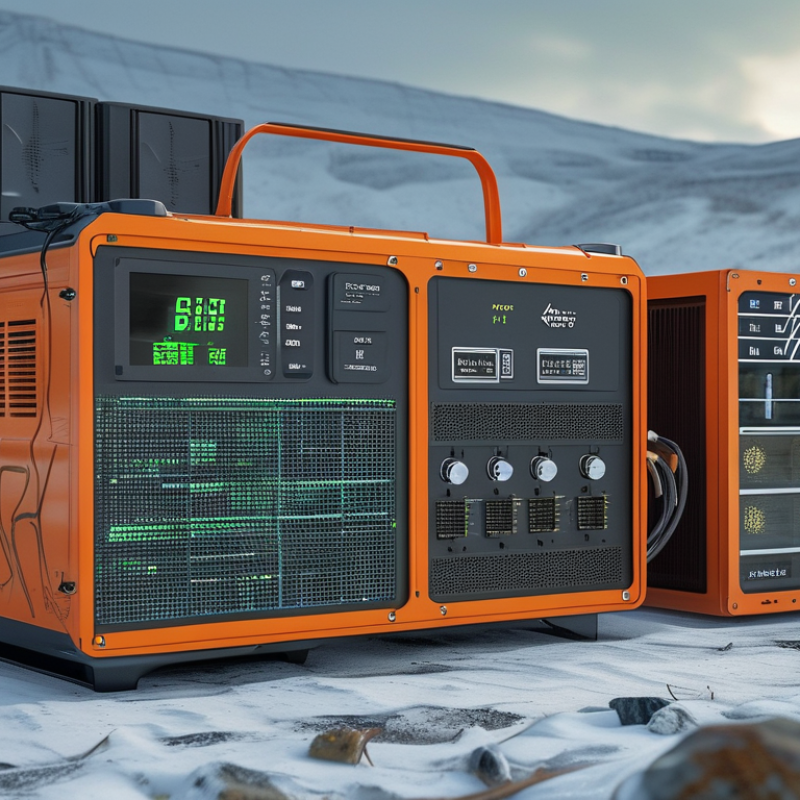
What Are the Top Off Grid Inverters for Global Buyers?

Understanding Off-Grid Inverter Types and Their Core Functions

What Are the Top Off Grid Inverters for Global Buyers?

Understanding inverter types is more useful than chasing a “top” model. A pure sine wave inverter produces smooth AC power for refrigerators, pumps, computers, and medical equipment. It usually costs more, but sensitive devices run more reliably. A modified sine wave unit may suit basic lights or heating tools, yet some motors become noisy or run hotter.

An inverter-charger combines DC-to-AC conversion with battery charging. It can accept generator or grid input where permitted, then switch power sources during low sunlight. Solar hybrid inverters add MPPT control, which adjusts solar voltage for better energy capture.

Low-frequency designs often handle short motor surges well, while high-frequency units can be lighter and more compact. Core functions include voltage conversion, battery protection, overload control, cooling, and safe shutdown.

In practice, sizing is easy to underestimate. A pump labeled 800 watts may demand several times that during startup.

Tips: Match the inverter’s continuous output and surge rating with real appliance measurements. Check battery voltage, solar input limits, idle consumption, and local electrical rules. Confirm cable length and thickness, because voltage loss wastes energy. I would also leave expansion capacity. A system that fits today may feel restrictive next year. Pure sine wave is usually the safer choice, but not always the most economical one. Maintenance access matters, too. Dust, heat, and poor ventilation quietly reduce performance.

Comparing Leading Off-Grid Inverter Technologies for Global Buyers

For global buyers, comparing off-grid inverter technologies requires more than checking rated power. Transformer-based inverters usually tolerate difficult loads and voltage changes well. They are durable, but often heavier and less efficient. Transformerless designs reduce weight and improve conversion efficiency. However, installation quality becomes more important. Proper grounding and protection are essential.

Pure sine wave output suits pumps, refrigerators, medical equipment, and sensitive electronics. Modified sine wave units may cost less, but they can create heat, noise, or unstable operation. Hybrid models combine solar charging, battery control, and backup input. Their flexibility helps in remote homes, though advanced controls can make troubleshooting harder. MPPT charging generally harvests more solar energy, especially during changing weather. Battery voltage, surge capacity, operating temperature, and standby consumption also deserve close comparison. A large power rating can still disappoint when motor loads start.

Tips: Match the inverter with local voltage, frequency, and electrical standards. Check cold-start performance for winter sites. In tropical regions, review ventilation and derating data. Ask for protection ratings, test reports, warranty terms, and repair procedures. Remote monitoring is useful, but it should not replace physical inspections. Some specifications look impressive on paper. Real performance may change with dust, heat, cable length, and aging batteries. A perfect inverter does not exist. A cautious design usually outperforms an ambitious one.

Evaluating Power Capacity, Efficiency, and Battery Compatibility

What Are the Top Off Grid Inverters for Global Buyers?

Choosing an off grid inverter starts with real power needs, not attractive specifications. A rural home may run a refrigerator, pump, lights, and communication equipment together. Check continuous output, surge capacity, and operating temperature. A refrigerator can briefly demand two or three times its running power. Undersizing causes shutdowns and shortens equipment life.

Efficiency matters during every charging and discharging cycle. A small percentage loss becomes significant in a remote system with limited sunlight. Look for efficiency figures measured under realistic loads, not only peak conditions. Battery compatibility also deserves careful testing. Confirm voltage range, lithium battery communication, charging profiles, and low-temperature protection. Lead-acid systems require different settings. Some installations still fail because the inverter and battery use incompatible control signals.

Tips: Start with the load. Record appliance wattage for one week. Add surge demand before selecting capacity. Ask for test reports, protection details, and local electrical certification. Confirm service support in your country. I have seen buyers focus on maximum output while ignoring idle consumption. That mismatch is costly. A perfect spreadsheet cannot replace testing the system during cloudy weather, motor startup, and battery voltage drops. Allow a practical capacity margin, but avoid excessive oversizing. Oversizing can reduce efficiency at light loads. Check the manual carefully.

What Are the Top Off-Grid Inverter Classes for Global Buyers?

Comparison of representative off-grid inverter capacity classes using commonly published market specifications. Actual performance varies by model, operating temperature, load type, and battery configuration.

Power capacity

Higher-rated classes are better suited to pumps, refrigeration, workshops, and multiple household loads.

Efficiency

Peak efficiency commonly rises toward 95–96% in larger modern units, although light-load efficiency may be lower.

Battery compatibility

48 V systems are common for 3–10 kW applications; 96 V configurations can reduce current in higher-power systems.

Battery voltage shown in the table is nominal system voltage. Confirm lithium battery communication, charging profiles, maximum charge current, and regional grid standards before purchase.

Inverter class Typical battery voltage Typical use
3 kW 24–48 V Small cabins and essential household loads
5–8 kW 48 V Full household systems and moderate motor loads
10–12 kW 48–96 V Large homes, workshops, and higher surge demand

Checking Safety Standards, Grid Independence, and Regional Requirements

Choosing an off-grid inverter requires more than comparing wattage. Safety comes before convenience. Look for certification aligned with the installation region, such as IEC, UL, or CE requirements. Grid-connected equipment may also need anti-islanding protection and local grid-code approval. An installer should verify grounding, insulation, overload protection, and battery safety. Paperwork alone is not enough. A useful review should admit uncertainty because local interpretations can differ.

True grid independence depends on real loads, not marketing figures. Check continuous output, surge capacity, idle consumption, and solar-input limits. A refrigerator may draw modest power but require a sharp startup surge. Pumps and tools can be even less predictable. Battery voltage and chemistry must match the inverter’s settings. Cold-weather shutdown and high-temperature derating also matter. Test the system under realistic conditions. A small design mistake can cause repeated outages.

Tips: Confirm your region’s voltage and frequency before purchasing. Check neutral switching, earthing rules, connector types, and required permits. Ask a qualified electrician to review the complete design, including cables and battery protection. Keep records of certificates, test results, and installation settings. If a seller cannot explain regional compliance clearly, pause before paying. Insufficient documentation is a warning sign.

What Are the Top Off-Grid Inverters for Global Buyers?
A standards-focused comparison of off-grid inverter configurations, safety requirements, grid independence, and regional electrical compatibility
Best-Fit Configuration Typical Battery Voltage Typical Continuous Output Common AC Output Recommended Use Grid Independence Key Safety and Performance Checks Regional Compatibility Notes Buyer Assessment
Compact low-voltage inverter 12 V DC 300 W–1.5 kW 120 V or 230 V AC, single phase Small cabins, lighting, communication equipment, and emergency loads High for low-demand applications; normally operates without a utility connection DC overcurrent protection, low-voltage shutdown, short-circuit protection, thermal protection, and adequate cable sizing Confirm the local AC voltage and frequency before purchase. A 120 V unit is not directly suitable for a 230 V installation. Best for small loads
Mid-size 24 V pure-sine inverter 24 V DC 1–3 kW 120 V or 230 V AC, single phase Small homes, mobile applications, refrigeration, pumps, and workshop tools High; can supply loads from batteries and renewable generation without grid support Pure-sine output, surge rating for motor starting, grounding provisions, battery isolation, and compliance with applicable electrical installation rules Frequency must match the load: 50 Hz is common in most of Europe, Asia, Africa, and Oceania; 60 Hz is common in North America and several other markets. Balanced entry option
48 V hybrid-capable off-grid inverter 48 V DC 3–15 kW 120 V, 230 V, or 120/240 V split phase Full-time residences, farms, remote offices, and high-use solar-battery systems Very high; normally supports solar charging, battery storage, generator input, and automatic load management IEC 62109-1 and IEC 62109-2 safety evaluation where applicable, anti-islanding controls if parallel operation is possible, surge protection, and temperature derating data 48 V systems reduce battery-side current compared with 12 V or 24 V designs, but they still require correctly rated DC disconnects, fuses, and conductors. Best overall flexibility
Split-phase residential inverter 48 V DC or higher-voltage battery system 5–15 kW 120/240 V AC, 60 Hz North American homes requiring both standard 120 V circuits and 240 V appliances High; can operate as a standalone source when correctly configured with transfer equipment UL 1741 or equivalent product evaluation where required, suitable transfer switching, neutral-to-ground bonding design, overcurrent protection, and generator compatibility 120/240 V split phase is common in the United States and Canada. It is not interchangeable with a 230 V single-phase system. Best for split-phase loads
Single-phase 230 V residential inverter 48 V DC or higher-voltage battery system 3–15 kW 230 V AC, 50 Hz Homes, small businesses, and remote installations across Europe, Africa, Asia, and Oceania High; provides an independent AC microgrid when loads remain within the inverter's power and surge limits IEC 62109 safety requirements, IEC 61000 electromagnetic compatibility considerations, residual-current protection, earthing, and local wiring-code compliance 230 V/50 Hz is widely used, but plug systems, earthing arrangements, and national installation rules differ by country. Best global single-phase fit
Three-phase off-grid inverter system 48 V DC or higher-voltage battery system 10–100 kW and above 400/230 V AC, 50 Hz, three phase Agricultural facilities, workshops, telecom sites, water pumping, and remote commercial facilities Very high; modular systems can provide independent three-phase power and phase-load management Phase synchronization, protection coordination, motor-starting capability, harmonic performance, emergency shutdown, and verified parallel-operation limits Three-phase systems require compatible distribution equipment and professional commissioning. Single-phase loads must be balanced where required. Best for commercial loads
Inverter with generator-start capability Commonly 24 V or 48 V DC 1–30 kW, depending on system architecture 120 V, 230 V, or split phase Locations with seasonal solar production, extended cloudy periods, or critical loads High; the generator is used as backup rather than as a permanent grid source Generator frequency and voltage acceptance range, automatic transfer timing, neutral bonding, fuel-safety controls, battery-charging current, and safe remote-start wiring Generator standards and fuel regulations are separate from inverter standards. The complete installation should be assessed as one coordinated system. Best for resilience
Modular parallel inverter system Usually 48 V DC or a high-voltage battery architecture 10–100 kW and above, depending on approved modules Single phase or three phase Expandable residences, microgrids, remote clinics, and small industrial sites Very high; capacity can be expanded without changing the basic energy-storage concept Approved parallel-operation method, current sharing, phase synchronization, fault isolation, communication redundancy, and manufacturer-stated maximum unit count Only units designed for parallel operation should be connected together. Mixing unapproved inverter families can create dangerous circulating currents or unstable output. Best for scalability
Portable battery inverter power station Internal lithium-ion battery, commonly below 60 V DC 300 W–3 kW 120 V or 230 V AC, single phase Temporary backup, field work, disaster response, and short-duration mobile power High for short periods; independence is limited by internal battery capacity and recharge options Battery management system, transport testing, enclosure protection, overload shutdown, thermal monitoring, and documented operating temperature range AC socket format, output voltage, frequency, and transport regulations must match the destination market. Best for portability
Important verification note: Output ranges are representative market ranges rather than guaranteed ratings for a specific product. Before installation, verify the exact product documentation, continuous and surge power ratings, battery chemistry compatibility, ingress protection, operating-temperature derating, earthing method, and local electrical rules. IEC 62109-1 and IEC 62109-2 address power-converter safety; IEC 61000 series requirements address electromagnetic compatibility; UL 1741 and CSA C22.2 No. 107.1 are commonly referenced in North American markets; AS/NZS 4777.2 applies to relevant grid-connected inverter systems in Australia and New Zealand. Grid-parallel operation may require additional national certification and utility approval even when an inverter is also capable of off-grid operation.

Choosing the Best Off-Grid Inverter for Different Energy Systems

Choosing the best off-grid inverter starts with the energy system, not the advertised wattage. A cabin with LED lights and a small refrigerator may need a 2–3 kW inverter. A workshop with pumps or compressors needs stronger surge capacity. Pure sine-wave output is safer for sensitive electronics and induction motors. The inverter should also match the battery voltage, solar array range, and local temperature.

IEA PVPS Trends 2024 reported more than 400 GW of new photovoltaic capacity worldwide in 2023. That growth shows why flexible solar integration matters. For systems with frequent clouds, select a wide MPPT voltage range and low start-up consumption. For battery-heavy homes, prioritize conversion efficiency, thermal protection, and programmable charging. IRENA’s Renewable Power Generation Costs in 2023 reported a roughly 90% fall in utility-scale solar costs since 2010. Lower generation costs do not excuse poor equipment sizing.

Check continuous output, five-second surge power, idle draw, and protection ratings. A 5 kW label can mislead if the inverter delivers that power only briefly. Dusty rural sites may need sealed enclosures, while cold regions require battery-temperature compensation. Remote monitoring is useful, but internet access can fail. Local displays and fault codes still matter. I would also leave 20% headroom for future loads. That choice costs more today. It may prevent an expensive replacement later.

FAQS

: What type of inverter suits sensitive appliances?

: Pure sine wave output usually suits refrigerators, pumps, computers, and medical equipment. It provides smoother electricity. Modified sine wave units cost less but may cause motor noise, heat, or unstable operation.

What does an inverter-charger do?

It converts battery power into AC electricity and charges batteries from an approved backup source. It can switch sources when sunlight falls. Settings still require careful checking.

How does a solar hybrid inverter work?

It combines solar charging, battery control, and backup input. An MPPT controller adjusts solar voltage for better energy collection during changing weather.

How should inverter size be calculated?

Match continuous output with measured appliance demand. Also check startup surges. An 800-watt pump may briefly need several times more power.

Which appliances need extra surge capacity?

Refrigerators, pumps, compressors, and power tools often need high startup current. A large label rating can still disappoint.

What battery details must buyers check?

Confirm battery voltage, chemistry settings, charging limits, and temperature range. Cold conditions may cause shutdowns. Heat can reduce performance.

Why do cables and ventilation matter?

Long, thin cables waste energy through voltage loss. Dust, heat, and poor airflow reduce inverter performance. Keep vents clear.

What safety and regional requirements should be reviewed?

Check local voltage, frequency, grounding, insulation, overload protection, permits, and required certifications. A qualified electrician should review the complete installation. Paperwork alone is not enough.

Conclusion

Choosing the right Off Grid Inverter is essential for building a reliable and independent energy system. This article explains the main inverter types, including models designed for solar-only applications, battery-based systems, and hybrid energy setups. It compares core technologies by examining their conversion methods, control features, operating flexibility, and suitability for different global environments. Readers will also learn how to assess power capacity, energy efficiency, surge performance, and compatibility with various battery chemistries and storage sizes.

The guide highlights the importance of checking safety certifications, protection functions, voltage requirements, and regional installation standards before making a purchase. It also considers how inverters perform in remote homes, mobile systems, agricultural sites, backup applications, and larger off-grid installations. By matching inverter capabilities with energy consumption, available generation sources, battery storage, climate conditions, and future expansion plans, global buyers can select a practical solution that supports stable power, efficient operation, and long-term system independence.


Aria

Aria

Aria is a dedicated marketing professional with a deep passion for innovative strategies and a keen understanding of our company's product offerings. With a wealth of experience in the industry, Aria excels at crafting engaging content that highlights the unique features and benefits of our......