A Car Inverter is a quiet but essential component behind modern vehicle performance. It converts direct current from the battery into alternating current for an electric motor. During regenerative braking, it can also reverse this process and return energy to the battery. The result is controlled acceleration, smoother torque, and improved energy use. Sometimes, a small metal box manages the entire driving experience.
The International Energy Agency’s Global EV Outlook 2025 reported more than 17 million electric cars were sold worldwide in 2024. That growth increases demand for efficient power electronics, including inverters. Research from MarketsandMarkets also identifies automotive power electronics as a rapidly expanding technology segment, driven by electric vehicles, hybrid systems, and stricter efficiency expectations. These figures show market momentum. They do not guarantee identical performance in every vehicle.
John Kelly, an automotive technology instructor at Weber State University, explains, “An inverter changes DC electricity into AC electricity.” This simple statement hides complex engineering. Modern units must manage voltage, current, heat, electromagnetic noise, and sudden changes in driver demand. A damaged inverter may cause warning lights, reduced power, or complete loss of propulsion. Diagnosis is not always obvious.
Understanding how a Car Inverter works helps drivers read specifications more carefully. Cooling design matters. Switching speed matters. Software matters, too. Yet marketing claims can sound more impressive than real-world results. Actual efficiency depends on temperature, battery condition, road grade, tire pressure, and driving habits. This guide examines the inverter’s structure, operating cycle, common faults, and practical maintenance concerns. The technology is powerful, but it is not magic.
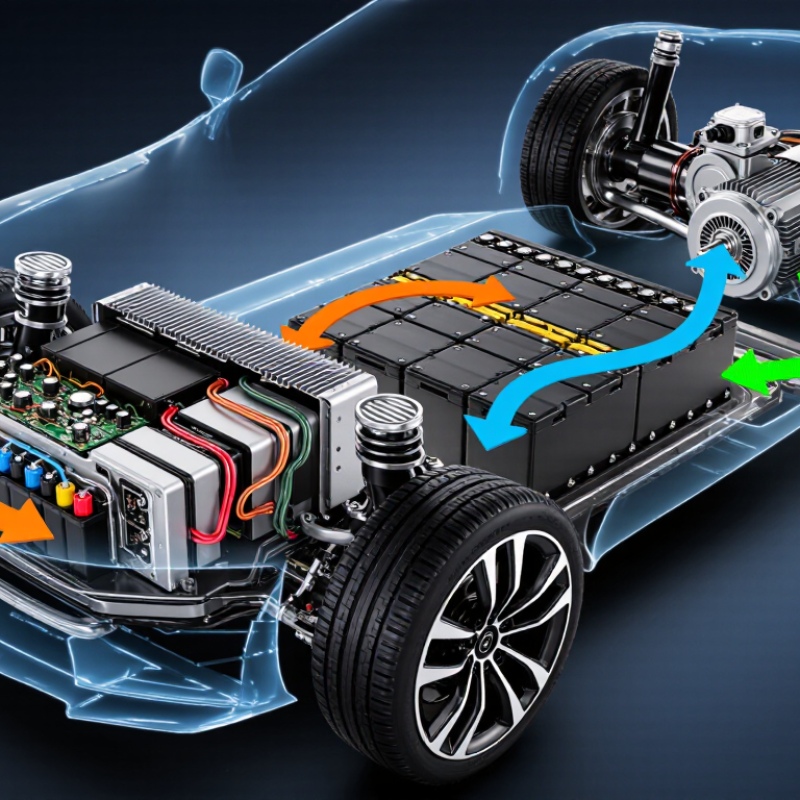
A car inverter is an electronic device that converts a vehicle’s direct current into household-style alternating current. Most vehicles provide 12-volt power through the battery or accessory socket. The inverter changes this low-voltage supply into a higher-voltage output for compatible electrical devices. It uses rapid electronic switching and internal circuits to create the new waveform. In practical terms, it can power a laptop charger, small fan, camera battery charger, or other modest equipment. That difference matters.
Small inverters usually connect to the accessory socket, while larger models use thicker cables attached directly to the battery. Their labels show continuous wattage and peak wattage. Continuous wattage is the safer figure for regular use. A device may consume more power when starting than during normal operation. I have seen people focus only on the printed maximum, which can cause overheating or sudden shutdowns. That assumption needs rethinking.
A reliable installation needs proper fuses, tight connections, and enough ventilation around the inverter. Heat builds quickly inside a crowded console or under a seat. Never cover the cooling openings. The vehicle battery can also discharge faster than expected, especially when the engine is off. Running an engine in an enclosed area is dangerous because exhaust gases can accumulate. Some inverters produce a smoother waveform than others, which may better suit sensitive electronics. I still prefer checking the device manual, because “compatible” is not always as simple as it sounds.
A car inverter is a compact power converter used inside a vehicle. It takes direct current from the battery and changes it into alternating current for compatible devices. Most household equipment expects AC power. The conversion begins with electronic switches that turn battery current on and off rapidly. This creates a pulsing electrical signal. A transformer may then increase the voltage to a household level. Filters smooth the signal and reduce unwanted electrical noise. The output can resemble normal wall power. Not perfectly.
In practical use, every conversion stage loses some energy. The battery therefore supplies more power than the device receives. For example, a 120-watt load may draw over 10 amps from a 12-volt battery after efficiency losses. That extra energy becomes heat. Ventilation matters. The rated output can also mislead users. A small inverter may run a lamp easily, while a motor can demand several times more power during startup. Check both continuous and peak ratings before connecting equipment. A correctly sized fuse near the battery adds protection, while loose connections can create dangerous heat.
Pure sine wave output is usually gentler for sensitive chargers, audio equipment, and medical electronics. Simpler waveforms may work with basic loads but can cause buzzing or excess heat. This distinction is easy to overlook. Measure voltage, watch temperature, and question optimistic specifications. Real conditions are rarely as clean as the label suggests.
A car inverter converts the vehicle’s direct-current battery power into alternating-current electricity. That output can run laptops, chargers, small tools, or medical equipment. The main types differ by waveform, voltage, and intended use. The category is less tidy than many product descriptions suggest.
A modified sine-wave inverter is affordable and suitable for simple loads, such as lamps or basic chargers. However, motors may buzz, overheat, or operate inefficiently. A pure sine-wave inverter produces electricity closer to household power. It is safer for sensitive electronics, audio equipment, refrigerators, and devices with induction motors. Vehicle power systems also use DC-DC converters, which reduce high-voltage battery power for low-voltage electronics. Strictly speaking, they are converters rather than traditional inverters, but people often group them together. The International Energy Agency reported nearly 14 million electric cars sold globally in 2023, representing about 18% of new-car sales. That growth makes efficient power conversion increasingly important.
Tips: Match the inverter’s continuous rating with your device’s real demand. Check the startup surge for motors and compressors. A 300-watt device may briefly need twice that power. Use a pure sine-wave model for sensitive equipment. Keep ventilation clear, because heat reduces efficiency and service life. Never assume a larger unit is automatically better; oversized systems can waste energy at low loads. I have found that the socket, cable thickness, and battery condition matter as much as the inverter label.
A car inverter converts the vehicle’s direct-current (DC) power, typically supplied by a 12-volt battery system, into alternating-current (AC) power for household-style devices. The chart shows idealized output waveforms for the three main inverter types.
Pure sine wave: Produces a smooth AC waveform and is suitable for sensitive electronics, motors, chargers, and medical equipment. Modified sine wave: Uses stepped voltage levels and works with many basic appliances, but some motors and audio equipment may run less efficiently or produce noise. Square wave: Switches directly between positive and negative voltage and is uncommon because it can cause stress, noise, and overheating in many devices.
A car inverter changes a vehicle’s 12-volt direct current into household-style alternating current. Choosing one requires more than matching a socket. The wrong model may overheat, shut down, or drain the battery.
Start with the appliance’s continuous wattage, not its advertised peak. Add the running watts of every device used at once. Motors and compressors often need a brief surge. Leave roughly 20 to 30 percent headroom. A 300-watt load deserves a stronger inverter. Check the vehicle outlet, too. Many sockets tolerate only modest loads. Higher-power units usually need short, thick cables connected near the battery. With the engine off, even a modest load can weaken a starting battery quickly. Running the engine helps, but does not create unlimited power.
Waveform matters. Sensitive chargers, audio equipment, and medical equipment generally perform better with pure sine wave output. Simpler heating devices may accept modified sine wave power, but compatibility is not guaranteed. Read the appliance manual. I once focused too much on maximum wattage and ignored cable length; voltage loss became the real problem. That was avoidable. Look for overload, low-voltage, over-temperature, and short-circuit protection. A cooling fan is useful, although fan noise can become annoying inside a quiet cabin. Keep ventilation openings clear, and never use an inverter with a damaged cable. Select a model with clear electrical ratings and recognized safety testing. If the figures seem vague, choose another unit.
| Selection Dimension | Key Facts | Why It Matters | Practical Guidance |
|---|---|---|---|
| Basic Function | A car inverter converts the vehicle's direct-current (DC) electricity into alternating-current (AC) electricity. | Most household-style appliances are designed to use AC power rather than the DC power supplied by a vehicle battery. | Use an inverter when you need to power compatible AC electronics from a vehicle's electrical system. |
| Typical Input Voltage | Passenger vehicles commonly use approximately 12 V DC systems. Many larger vehicles use approximately 24 V DC systems. | An inverter must match the vehicle's nominal DC voltage to operate safely and correctly. | Check the vehicle manual or battery specification before choosing a 12 V or 24 V inverter. |
| Output Voltage | Common AC outputs are approximately 110–120 V or 220–240 V, depending on the electrical standard of the intended appliances. | The output voltage must be compatible with the appliance and its plug or power adapter. | Select the output voltage used by the appliances you plan to operate; do not assume all inverters have the same output. |
| Continuous Power Rating | This is the power the inverter can deliver continuously under specified operating conditions. | A load that exceeds the continuous rating can cause shutdown, overheating, or damage. | Add the running wattage of all devices that may operate at the same time, then choose an inverter with additional capacity. |
| Peak or Surge Power | Some appliances draw significantly more power for a short period when their motors or compressors start. | Insufficient surge capacity may prevent equipment from starting even when its normal running wattage appears acceptable. | Compare both continuous and peak ratings, especially for motor-driven equipment, pumps, refrigerators, and power tools. |
| Modified-Sine-Wave Output | This output approximates a sine wave using stepped voltage changes and is generally less expensive. | Some sensitive electronics, audio equipment, motors, and chargers may run noisily, inefficiently, or unreliably. | Use it mainly for simpler loads that are confirmed to be compatible, such as selected chargers or basic lighting. |
| Pure-Sine-Wave Output | This output more closely reproduces utility-style AC power. | It is generally better suited to sensitive electronics, induction motors, medical equipment, and devices with precise power requirements. | Choose pure sine wave when compatibility, low electrical noise, or reliable motor operation is important. |
| Power Connection | Low-power units may connect through a vehicle accessory socket, while higher-power units generally require direct battery connections. | Vehicle sockets and their wiring have current limits that may be lower than the inverter's maximum output. | Follow the socket rating and installation instructions. Use correctly sized cables and a fuse near the battery for direct connections. |
| Approximate DC Current | At 12 V, a 120 W load requires roughly 10 A before accounting for conversion losses; a 600 W load requires roughly 50 A before losses. | Higher AC output requires substantial DC current, which affects cables, fuses, connectors, and battery runtime. | Estimate current using DC current ≈ AC watts ÷ DC voltage ÷ efficiency. Actual current varies with load and inverter efficiency. |
| Efficiency | Inverters consume some energy as heat, so input power is higher than the AC power delivered to the appliance. | Lower efficiency increases battery drain and heat generation. | Review the efficiency specification and avoid leaving the inverter switched on with no load if it has a noticeable idle draw. |
| Battery Runtime | Runtime depends on battery capacity, appliance load, inverter efficiency, battery condition, and whether the engine is running. | A high-power appliance can discharge a vehicle battery quickly when the engine is off. | For extended use, monitor battery voltage and follow the vehicle and battery manufacturer's operating recommendations. |
| Protection Features | Common protections include low-voltage shutdown, over-voltage protection, overload protection, short-circuit protection, and thermal shutdown. | These features reduce the risk of damage caused by abnormal voltage, excessive current, wiring faults, or overheating. | Choose an inverter with clearly stated protection functions and never bypass its fuse or safety controls. |
| Cooling and Ventilation | Many inverters use ventilation openings and may include a temperature-controlled fan. | Blocked airflow can raise internal temperature and trigger protective shutdown or shorten component life. | Install the unit in a dry, clean, well-ventilated location away from flammable materials and direct heat. |
| Appliance Compatibility | Appliances with motors, compressors, heating elements, or sensitive electronic controls can have special power requirements. | Rated wattage alone may not show startup demand or waveform sensitivity. | Check the appliance manual for voltage, frequency, running power, startup power, and waveform requirements before use. |
| Frequency | AC systems commonly use either 50 Hz or 60 Hz, depending on the region and appliance design. | Some motors, clocks, and timing-sensitive equipment may not operate correctly at an incompatible frequency. | Match the inverter frequency to the appliance and the electrical standard for which it was designed. |
| Best Overall Choice | The right inverter is determined by input voltage, output voltage, frequency, waveform, continuous power, surge power, connection method, and safety features. | A higher wattage rating alone does not guarantee safe or suitable operation. | Choose the smallest inverter that comfortably meets the real load requirements, with appropriate reserve capacity and correct vehicle installation. |
A car inverter converts the vehicle’s direct-current battery power into household-style alternating current. It can run small devices, but its safety features matter more than its wattage. The International Energy Agency reported over 14 million electric-car sales in 2023, showing how rapidly vehicle power electronics are expanding. Yet even a compact inverter can create heat, sparks, or battery damage when misused.
Look for low-voltage shutdown, overload protection, short-circuit protection, and thermal shutdown. A built-in cooling fan helps, but it cannot fix blocked ventilation. Some units include ground-fault protection, which can reduce shock risk near damp surfaces. Never place an inverter under a seat, beside loose fabric, or near spilled liquids.
The National Fire Protection Association reported about 35,150 home fires annually involving electrical distribution and lighting equipment from 2015 to 2019. That statistic is not vehicle-specific, but it shows why electrical protection deserves attention. I still find battery drain easy to underestimate. A device may work perfectly, then leave the car unable to start.
Tips:
Check the vehicle manual before using the socket. Keep total load below the rated continuous output, not the peak figure. Use short, undamaged cables and stop immediately if you smell hot plastic. Do not connect an inverter directly to household wiring. That step needs qualified electrical work. Also, sensitive chargers may perform poorly with modified-wave output. The label does not always tell the whole story.
A car inverter changes 12-volt direct current into household-style alternating current. It can power laptops, small fans, and camera chargers. That difference matters.
Electronic switches rapidly turn battery current on and off. A transformer may raise the voltage. Filters then smooth the output and reduce electrical noise. The result resembles wall power, but it is not perfectly identical.
Continuous wattage shows the power an inverter can provide during normal use. Use this figure when choosing a model. Peak wattage only covers brief starting surges. Labels can mislead.
Add the running watts of every device used together. Then leave about 20 to 30 percent extra capacity. Motors and compressors may need several times more power during startup. A 300-watt load needs a stronger inverter than its number suggests.
Small inverters commonly connect through the accessory socket. Check the socket’s permitted load first. Higher-power inverters usually need thick cables connected near the battery. A socket is not unlimited.
Yes, especially when the engine is off. Even a modest load can weaken a starting battery quickly. Conversion losses also make the battery supply more power than the device receives. A 120-watt load may draw over 10 amps from a 12-volt system.
Inverters produce heat during power conversion. Keep cooling openings uncovered and provide space around the unit. Use a correctly sized fuse near the battery. Loose connections can become dangerously hot. Crowded spaces are poor locations.
Pure sine wave output is generally gentler for sensitive chargers, audio equipment, and medical electronics. Basic heating devices may accept simpler waveforms. Compatibility is not guaranteed. I once trusted the maximum rating and ignored voltage loss from long cables. That mistake was avoidable.
A Car Inverter is a device that converts the vehicle’s direct-current (DC) electricity into alternating-current (AC) power, allowing selected household electronics to operate from a car’s battery system. It typically uses electronic switching circuits to change the voltage and produce a usable AC output. Car inverters come in different forms, including compact models for low-power devices and higher-capacity units designed for greater electrical demands. Some provide a basic waveform, while others produce cleaner power for sensitive equipment.
Choosing the right Car Inverter depends on the required wattage, outlet type, battery capacity, and intended use. Users should calculate both continuous and starting power needs, leaving a safety margin to prevent overloads. Important safety features may include overheat, overload, short-circuit, and low-voltage protection. However, an inverter cannot create unlimited energy: excessive use may drain the battery, strain the vehicle’s electrical system, or cause overheating. Proper ventilation, correct connections, and responsible operation are essential.

PASS POWER